

jnptd.over-blog.com/
18 Janvier 2021

Installing various operating system is an interesting task and I enjoy it a lot. You might know that how to create bootable USB for Windows and also create a bootable USB for Mac OS. In this article, I'm going to show the easiest and better that you can create bootable USB for Kali Linux or Ubuntu. For this demonstration, I want to use the 'Universal USB Installer' software. And you will get more information about this software. How It works and how to create bootable USB for Kali Linux using universal USB installer. Read this guide very cautiously.
Universal USB Installer aka UUI is a Live Linux USB creator that allows you to choose from a selection of Linux Distributions to put on your USB Flash Drive. The Universal USB Installer is easy to use. Simply choose a Live Linux Distribution, the ISO file, your Flash Drive and, click Install. Upon completion, you should have a ready to run bootable USB Flash Drive with your select operating system installed.
First, boot Linux OS (Lubuntu 18.04) from your bootable installation media and launch installation. Build Your Own Linux USB Stick: we talk mostly about Windows tips and tweaks, but it's time we give some smaller operating systems some love, too. This time, let's see how to bring a full working and portable copy of Linux into your USB memory stick with only a few clicks. Liveusb-builder is a script suite to create multiboot USB stick for GNU/Linux distributions. It's lightweight with few dependencies, and it's extensible and hackable. The source code is hosted on both git.wehack.space and GitHub.
Before creating bootable USB for Linux, you have prepared the following requirements in order to create bootable USB for Kali Linux.
Once the download is completed, follow these instructions. Open the universal USB installer. This software is portable and does not need installation. Just click on the software then create bootable Flash drive for Kali Linux.
Now, you will see a warning message that pops up for you. This message is about the formatting USB flash drive. Click on 'OK' button to continue the process.
Create Bootable USB Flash Drive for Linux
Right after clicking on the 'OK' button on step 2, wait for some minutes to complete. It will take around 20 to 30 minutes.
This was the simple and easy method that you can create bootable USB for Kali Linux. Creating bootable USB for Linux is not so difficult. If you have got any problem, feel free to share with us via the comment form below. Thanks for being with us.
Ubuntu live USB Creators allow us to flash Pen drives using the ISO image of Linux operating systems that support Live environment. Here we will list and talk about how to use those.
Live Environment is not just limited to Ubuntu only, most of the Linux operating system comes with Live support. This means we can use them and perform all computing tasks, however without actually installing that particular Linux operating system. For example Ubuntu Live, Kali Linux, Pop OS, Linux Mint, Fedora, etc. all of them come with two options one is to use them as a LIVE OS, and if you like then use the installation one as well…
H0wever, few distributions offer there Live Linux as a separate ISO file besides the standard such as Kali, where Ubuntu's standard version whether it is Ubuntu 20.04/20.10/18.10 or others all of them come with a 'Try Ubuntu' option which is basically to try Ubuntu as Live CD or USB.
What is a Live USB?
A Live USB is a USB drive containing OS files to give full access to the operating system that further can be booted with or without any internal hard drive in the computer system. It allows us to perform all the functions that an installed OS lets us such as installing programs, accessing all system hardware, writing storage devices, and more. Most of the Linux OS can be run and used from a USB flash drive including modern Windows 10. Know more about it on Wikipedia.
In this article, we will let you know the few tools that can help us to create a bootable Live Ubuntu USB drive.
Cod 4 update. Note: Before using any of the below-given tools to create Live Ubuntu Linux USB, you should have its ISO file, which is available on the official website of it.
Here is the link to download Ubuntu LIVE CD:
Comparison Table for Ubuntu USB creator tools
Contents
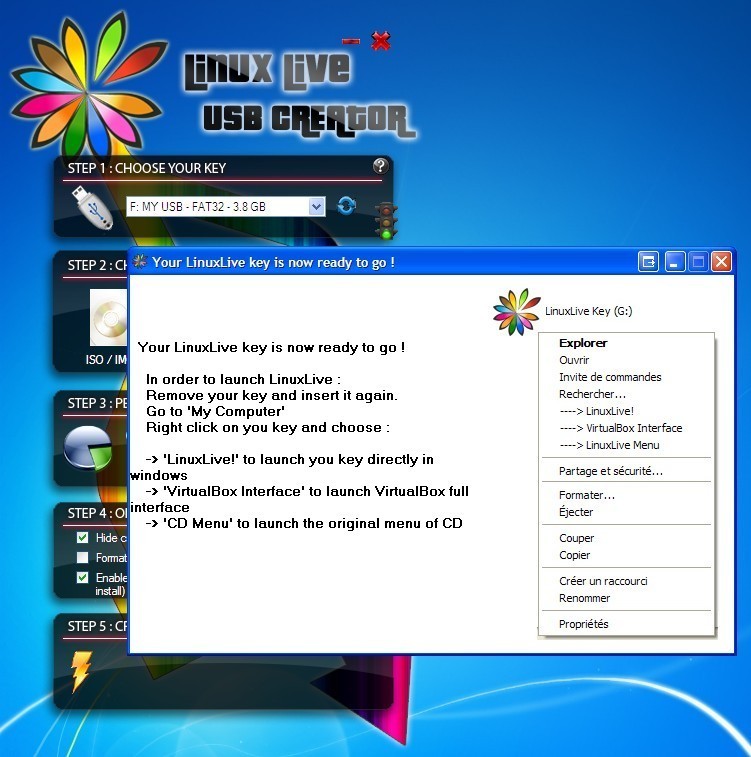
Startup Disk Creator (USB-creator) is the official Ubuntu Live USB creator, thus if you have a system that already has an Ubuntu or its based operating systems then you don't need to install any other software since you already have one. On the latest versions of Ubuntu, the users can simply search for Startup DiskCreator in all Applications. It is available by default in all releases of Ubuntu from 8.04 to 18.04 or 20.04…
In case you don't have then you can get this Startup application then we can install it using a simple command:
If you are using KDE front end then use:
This application is meant to create a bootable USB disk using Ubuntu CD or ISO file. Startup Disk USB creator's interface is quite easy to understand with only a few options.
Rufus is the best open-source software to use on Windows 10/8/7 running systems to create Ubuntu Live USB in just a few clicks. It is portable software, thus, we don't need to install it on our system.
It has an extremely simple graphical user interface from where we can easily create a bootable USB of any mainstream operating system that has an ISO file. Not only Linux distros but also Windows ISO files are supported by the Rufus. Apart from the ISO, raw disk image files can be used in this bootable USB creator tool including the compressed one.
To ensure the USB drive boots in a correct way Rufus can automatically download Syslinux or GRUB bootloader for the Linux we are flashing.
Furthermore, would you like to use live Windows 10 from USB, I mean Windows 10, runs directly from the Pen drive, then Rufus comes with an option to create i.e Windows To Go bootable media plus MS-DOS or FreeDOS installation is also possible. To know more see– How to install Windows 10 on USB using Rufus
However, the limitation of this software is it is available only for Windows operating systems.
Create Ubuntu Live USB using Rufus
balenaEtcher which is a cross-platform bootable Live USB creator application not only for Ubuntu but also for other Linux distros. It is also known as Etcher for Flash OS images to SD cards & USB drives. We can use it on Windows, macOS, and Linux OS to create a Live Ubuntu USB.
The best part of this USB creator is its interface that comprises three steps to flash any USB drive.
It can support both 32-bit and 64-bit versions of the Operating system. Etcher installation is not only super easy on Windows OS but also for Linux as well. Double-click on its downloaded setup and that's it. Know more about balenaEtcher installation on Linux.
Apart from the files, we can also use the URL option of this tool. It will automatically fetch the ISO image and then flash the same on the Pen drive.
In addition to all, its Copy Drive function allows users to copy any existing drive to another drive, whether it is external, internal, or USB.
Unetbootin (Universal Netboot Installer) is another open-source software that has the ability to download the ISO files of various Linux distros directly from its interface. That makes it very easy to create a LIVE USB system without leaving the software, however, if you already have the bootable ISO then using that is also possible on UNetbootin.
Just like Etcher, UNetbootin is also a cross-platform utility that makes it a nice option to create live USB sticks with Linux.
It is very light in weight and portable thus doesn't require any installation. The program offers a selection of various Linux distributions and other tools such as Parted Magic, Dr. Web Antivirus, or SystemRescueCD in a drop-down menu under 'Distribution'.
Create an Ubuntu Live USB with the latest version using Untebootin
Once the process is done, operating systems can be run directly from a USB stick. Furthermore, existing Windows ISO images can also be loaded very easily. In short, if you want to use Linux without installation or reinstall Windows using an existing ISO file, you should take a closer look at this program.
The portable and free tool supports a variety of Linux-based operating systems, tools for cloning hard drives and data recovery or Windows data carriers, and also helps to download the appropriate ISO files. Yes, this one is also available only for Windows running operating systems and portable in nature that can be used without installing it at all. Thus, Universal USB Installer can be started directly after the download on Windows Vista, Windows 7, Windows 8, or Windows 10 (32-bit / 64-bit) must be available for use.
By downloading the Universal USB Installer, USB sticks can be made bootable and used as an installation medium as well as for living operating systems. For that:
For most of the Linux systems, the Universal USB Installer also offers download links if the appropriate ISO file is not yet available.
Moreover, after clicking on 'Create', the little program does its work automatically. Just like any other LIVE USB creator, the user must select the bootable USB drive in the boot sequence as a priority via the BIOS to run the LIVE Ubuntu or any other OS.
Ventoy has a different concept when running a Live Ubuntu system, well, not only Linux but also to install ISO file of any OS. Where all other above Live USB creators allow flashing one operating system at a time, Ventoy can be used to boot a single USB drive for multiple operating systems.
Instead of flashing the USB drive, again and again, to install OS or for Live USB; Ventoy only does this one time. It means flash your Pen drive with Ventoy once and then simply copy ISO files of the various OS just directly to that USB drive.
Ventoy offers a booting environment that will show a boot menu when we boot our system with a USB drive flashed with it, and in that menu, it will list all the ISO files available in that particular USB stick. It supports x86 Legacy BIOS, IA32 UEFI, x86_64 UEFI, ARM64, and UEFI.
You can an idea from the below screenshot.
If you are a Windows user, then simply download its setup, run it, select the USB drive, and format it using Ventoy. After that open the USB drive and transfer the ISO file of the Linux or Windows that you want to run LIVE or install on your system.
For Linux users:
sh Ventoy2Disk.sh i /dev/XXXNote: replace the XXX with the USB device, for example, /dev/sdb.
Alternatively, we can use the ISO file of Ventoy that is also available on the Github page. Simply flash that ISO file using any of the above-mentioned tools such as Rufus and Etcher. After that move your ISO file to that flashed USB drive.
Fedora Media Writer is another option to create Ubuntu Live USB, however, officially it is promoted as a tool that allows users to create LIVE USB using Fedora image but using its custom image option, the user can also use the Ubuntu and other Linux ISO files to write on their portable drives.
It is available for Windows, macOS, and Linux (as a flatpak image).
So, these were some best Ubuntu Live USB creators that one can easily download and start working with. They all are free to download. However, if you are on Windows operating system then we recommend using Rufus, and Linux users can go for BalenaEtcher and Ubuntu Startup Disk.


/image%2F6308715%2F20210214%2Fob_f4903d_https-www-jw-org-brocasting.jpeg)
/image%2F6308715%2F20210214%2Fob_97882c_animal-crossing-switch-release-date-us.jpeg)
/image%2F6308715%2F20210214%2Fob_deff4d_toast-titanium-14-product-key.jpeg)
/image%2F6308715%2F20210214%2Fob_731695_bo3-steam-player-count.jpeg)